
Outsourcing development is one of the fastest ways for an agency to grow without hiring. It’s also one of the fastest ways to damage a client relationship if the wrong person is behind the code.
I work as a white-label WordPress developer for agencies, which means my name never appears on the project. Your client sees your brand, your process and your results. That only works if the developer behind the scenes behaves like part of your team.
This is the checklist I’d want any agency to hold me to. Use it to vet a new partner, or to check whether your current one is pulling their weight.
1. They stay invisible to your client
White-label means exactly that. Your developer should never contact your client directly, add their own credits to the footer, or leave their branding in the code, the admin area or plugin names.
What to look for:
No developer credits or links on the site unless you ask for them
Admin accounts and emails set up under your agency, not theirs
A clear agreement that the client relationship belongs to you
2. They ask questions before they write code
A developer who starts building straight from a Figma file without asking anything is guessing. Good partners ask about the things a design file doesn’t show: how content will be edited, what happens on mobile, which forms connect where, and who will maintain the site later.
Expect a short list of questions after the first brief. It’s a sign they’re thinking about the finished site, not just the first screen.
3. The build is editable without them
Your client will want to update text, swap images and add pages long after launch. If every change needs a developer, the site becomes a support burden for you.
A good white-label build gives editors:
Custom blocks or fields that match the design, so content can’t break the layout
Clear labels and help text inside the editor
Reusable sections instead of one-off templates
Bloated page builders that slow the site down shouldn’t be the default. They’re fine when you choose them on purpose, but they shouldn’t be the only tool your developer knows.
4. Performance is part of the job, not an upsell
Speed affects SEO, conversions and how your agency looks. It shouldn’t be something you pay extra for after launch.
Ask how they handle:
Image sizes and modern formats like WebP
Loading only the scripts and styles each page needs
Caching and hosting configuration
Core Web Vitals checks before handover
5. Security is built in from day one
Most hacked WordPress sites aren’t targeted by a person. They’re found by automated scanners looking for outdated plugins, weak passwords and exposed login pages. A developer who takes security seriously closes those doors before launch.
The basics every build should include:
Updated core, themes and plugins, with nothing installed that isn’t used
Strong admin passwords, two-factor authentication and no “admin” username
Login rate-limiting and XML-RPC disabled when it isn’t needed
Correct file permissions and secrets kept out of the codebase
Regular, tested backups
If a developer can’t explain how they protect a site, they’re probably not doing it.
6. Communication fits your workflow
You shouldn’t have to chase updates. A reliable partner tells you what they’re working on, flags problems early and works inside your tools, whether that’s Slack, ClickUp, Asana or plain email.
Time zones aren’t a problem when communication is predictable. Agree on response times and a regular update rhythm at the start, and it rarely becomes an issue.
7. Code is clean, documented and yours
You should be able to hand the project to another developer without starting over. That means:
Code in a Git repository you can access
Consistent structure and naming, following WordPress coding standards
No licence keys or premium plugins tied to the developer’s personal account
A short handover note explaining anything custom
8. Testing happens before you see it
You shouldn’t be the QA team. Before a build reaches you, it should already have been checked across major browsers, real mobile devices and different screen sizes, with forms and integrations tested end to end.
9. They support the site after launch
Launch day isn’t the end. Plugins need updates, clients request changes, and things occasionally break. Ask what support looks like after handover, whether that’s an hourly arrangement or a monthly retainer, so neither of you is guessing when a request comes in.
The short version
A good white-label WordPress developer:
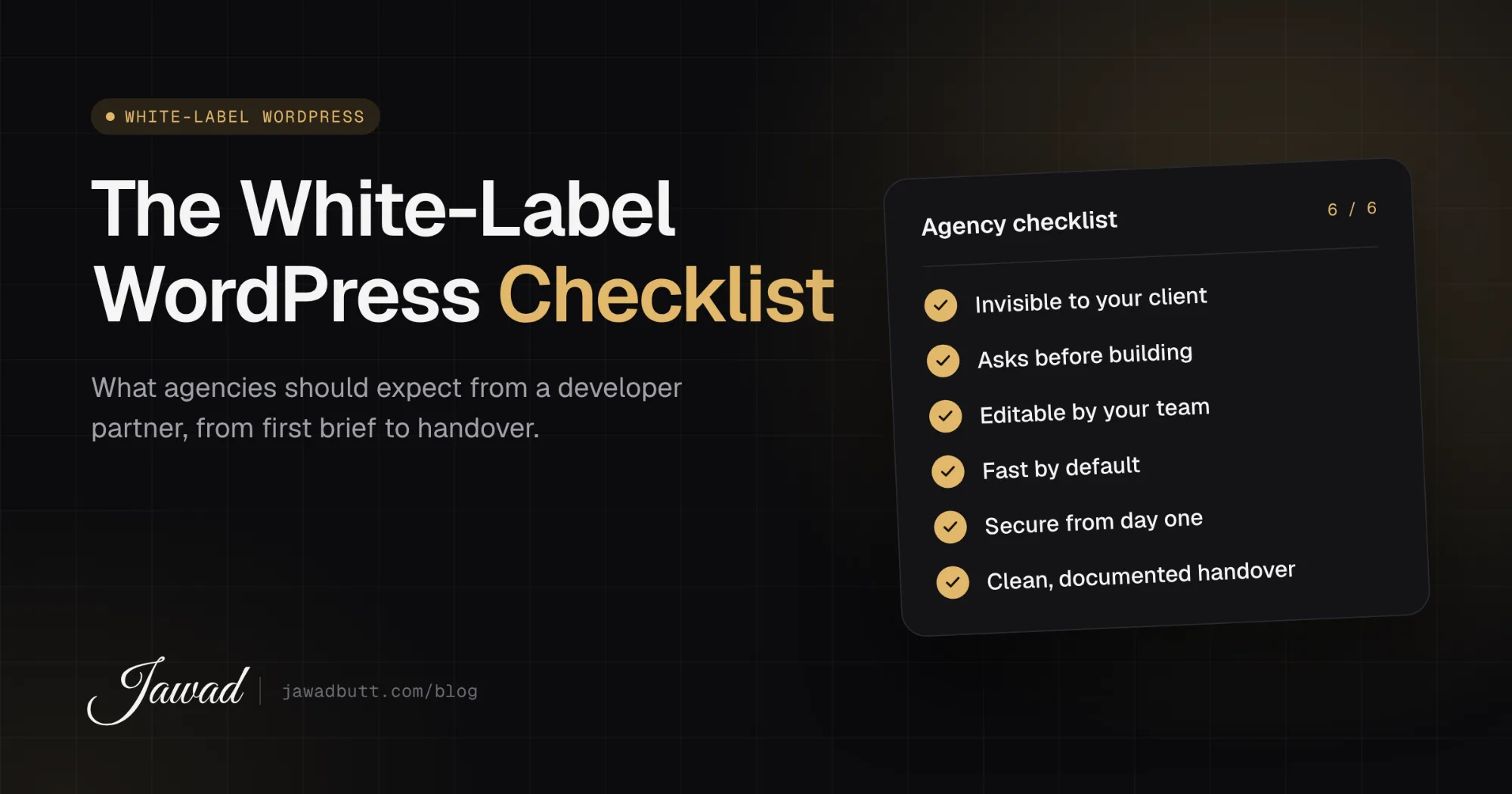
Stays invisible to your client
Asks the right questions before building
Builds sites your client can edit safely
Treats performance and security as standard
Communicates clearly and on schedule
Hands over clean, documented code you own
Tests before you ever see the work
Is still there after launch
If you’re looking for a white-label WordPress partner for your agency, get in touch. I’m happy to talk through how I’d fit into your process.